Understanding Saratoga’s Distinct Home Areas and Lifestyles
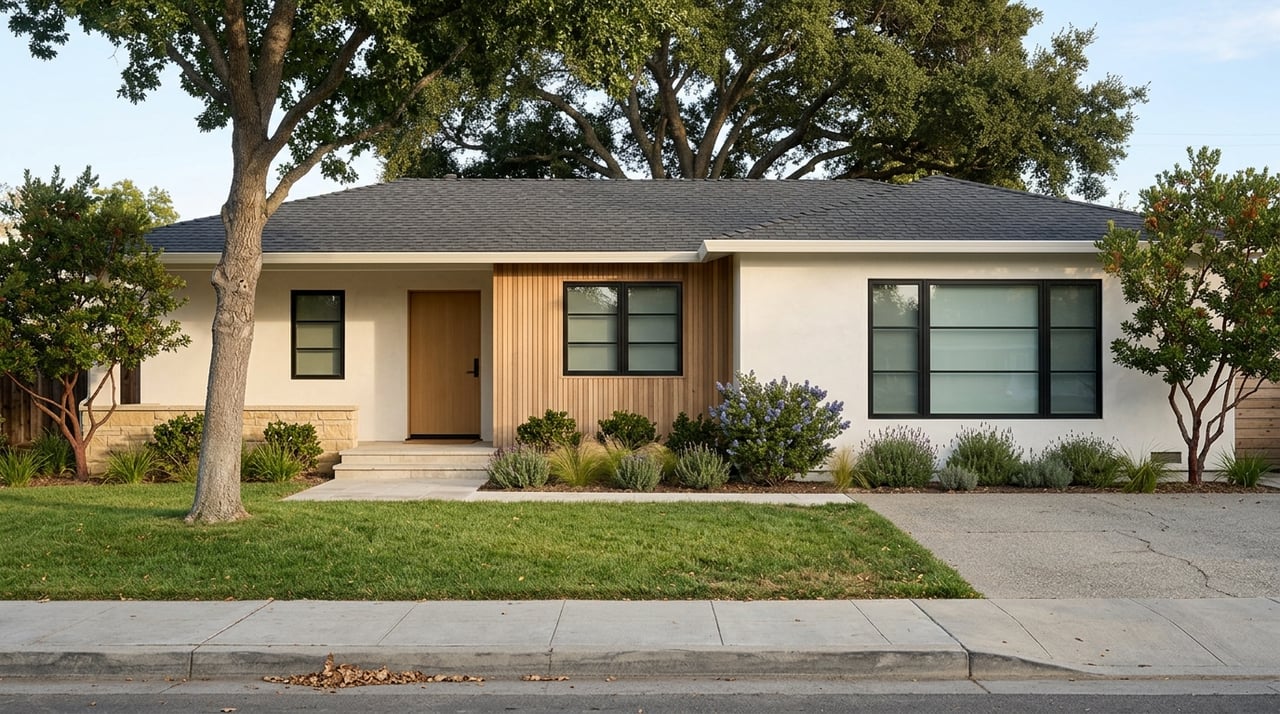
If Saratoga seems simple on a map but complicated once you start touring homes, you are not imagining it. One part of the city can feel close to shops and coffee, while another feels tucked into trees and open space with much larger lots. Understanding those differences can help you focus your search, set better expectations, and choose a lifestyle that fits how you actually want to live. Let’s dive in.
Saratoga is a small residential city of about 31,000 in Santa Clara County, but it covers a wide range of living environments. City planning and zoning help explain why. Residential areas include single-family districts with minimum lot sizes from 10,000 square feet up to 40,000 square feet, along with hillside and open-space categories.
That framework creates meaningful block-by-block change. In one area, you may find homes closer to Saratoga Village and daily conveniences. In another, you may find larger parcels, more separation between homes, and a stronger connection to trails, mature landscaping, and hillside terrain.
The city also preserves a semi-rural character. Saratoga’s planning documents note that many local streets were developed without finished curbs, gutters, or sidewalks, and the street network is designed in part to discourage cut-through traffic in neighborhood areas. That means even homes near central Saratoga may not feel urban in the usual sense.
Historic Saratoga Village is the city’s core lifestyle district. The city describes it as the heart of Saratoga, with dining, shops, galleries, coffee houses, parks, trails, and local landmarks such as the Saratoga Historical Museum and Park, Blaney Plaza, and the Foothill Club.
If you want the most convenient, walk-to-town experience in Saratoga, this is the area many buyers explore first. The appeal is less about large acreage and more about having a more connected daily routine near Big Basin Way.
The housing mix around Big Basin Way is broader than some buyers expect. Recent examples include townhomes and condominiums in roughly the mid-$1 million to low-$2 million range, along with detached homes in the high $2 million to low $3 million range. There are also occasional larger or more unusual parcels that can price above or below those bands depending on lot size, condition, and location.
That range matters because it shows the Village area is not one single product type. You may find attached homes that support a lower-maintenance lifestyle, detached homes with more traditional layouts, or retreat-style properties on larger land near the same general area.
Village-adjacent living often works well if you value convenience first. You may prefer being closer to restaurants, coffee spots, and civic landmarks rather than prioritizing a large lot or a more secluded setting.
Transit is also more corridor-based than citywide. VTA service appears along key streets such as Saratoga and Saratoga-Sunnyvale rather than on a dense block-by-block grid, so it helps to think of access here as selective and practical, not urban in the downtown San Jose sense.
If your priority is freeway access, many buyers look toward the flatter east and southeast portions of Saratoga. Areas around Saratoga Avenue, Quito Road, and the SR 85 corridor stand out because city documents identify Saratoga Avenue at SR 85 as a major entry point, with Saratoga-Sunnyvale and Big Basin Way also serving as important access corridors.
These pockets can be especially relevant for relocating professionals who want Saratoga’s residential setting but also care about drive time. Compared with some foothill locations, the daily in-and-out can feel more straightforward.
This section of Saratoga tends to offer a more mixed housing inventory than the foothills. Research examples include older ranch-style homes on standard lots, newer larger rebuilds, and some attached housing options. Realtor.com’s Quito Center page also showed condos priced from around $910,000 to just over $2 million, while home examples on Quito Road ranged well above $2 million and into the $4 million range.
That broader spread can make this part of Saratoga appealing if you want more flexibility in home type. It may also be a useful starting point if you want Saratoga but are still comparing attached homes, older single-story houses, and larger updated residences.
The main tradeoff here is simple. You are often choosing efficiency over seclusion.
These flatter areas are generally less about a walkable village lifestyle and less about estate-style acreage. Instead, they tend to appeal to buyers who want practical access, flatter lots, and a wider range of home sizes and price points.
At the other end of the lifestyle spectrum, Saratoga’s foothill and estate pockets offer a very different experience. The city’s trail system highlights areas such as Parker Ranch Trails, Heritage Orchard Area Trails, Mt. Eden Road Area Trails, and San Marcos Open Space Trail, showing how strongly many upper neighborhoods connect to open space and hillside terrain.
For many buyers, this is the Saratoga they picture first. Larger parcels, mature trees, privacy, and a stronger sense of retreat often define the appeal.
City land-use categories help explain why these homes can feel so different from flatter parts of town. Residential Hillside Conservation is capped at 0.5 dwelling units per acre, while other very low density categories also limit how tightly homes can be placed.
The city also notes that planning considerations such as tree preservation, geotechnical clearance, and residential design review can matter on many projects. If you are considering remodeling, expanding, or building, these are important questions to review early.
Current examples show foothill homes often begin in the mid-$3 million range for smaller parcels and move into the upper $4 million to $5 million range fairly quickly. True estate properties can rise into the $8 million to $13 million-plus range as land area, privacy, and finish level increase.
What drives value here is not just square footage inside the home. Parcel size, setting, privacy, mature landscaping, and access to open-space surroundings often play a major role.
If you are trying to narrow your search, it helps to compare Saratoga by lifestyle instead of by name alone. The city’s neighborhoods often make more sense when you look at how you want your day-to-day life to feel.
Here are four of the most useful comparison points:
A Village-adjacent home may give you more convenience and a more pedestrian routine. A flatter edge neighborhood may give you easier freeway access and a broader housing mix. A foothill or estate area may give you more privacy, mature landscaping, and a stronger connection to open space.
In Saratoga, the feel of a home is only part of the story. Ownership experience can vary based on the road, lot, and planning context.
If you are considering a hillside property or a home on a private street, it is smart to verify the road status and ask about any property-specific constraints. City resources show that private-street status exists in Saratoga, and planning review for trees, grading, geotechnical issues, or design can affect future projects depending on the property.
That does not mean these homes are harder to own. It simply means the right due diligence can help you match the property to your goals, especially if you are thinking beyond the current house and considering future updates.
The best Saratoga neighborhood for you depends on what you value most. Some buyers want coffee, dining, and a more connected routine near the Village. Others want a flatter lot and a more efficient commute. Others are looking for privacy, trails, and the feel of a hillside retreat.
Because Saratoga changes so quickly by address, local guidance matters. A home that looks similar online can offer a very different day-to-day experience once you factor in access, lot size, topography, and how close you feel to the parts of Saratoga you plan to use most.
If you want help matching Saratoga’s different home areas to your lifestyle, commute, and price range, connect with Janet Souza. She brings a concierge-style approach, deep local knowledge, and clear market guidance to help you evaluate Saratoga with confidence.

Hello! I'm Janet Souza, lifestyle blogger and REALTOR® at Christie's International Real Estate Sereno. I live and work in Silicon Valley and love everything our wonderful area has to offer. If you live in Silicon Valley or are thinking about moving here, you've come to the right place! Stay up to date with local events, theater, concerts, Real Estate and more!
Fundamental to how Janet Souza views her role as her client’s real estate advisor, she seamlessly blends her former professional worlds that span consulting, engineering, marketing, strategy, and executive sales negotiations as her frame of reference, bringing a premier standard of performance and uncompromised integrity to her clients.